
¿Qué es una mini linterna EDC?
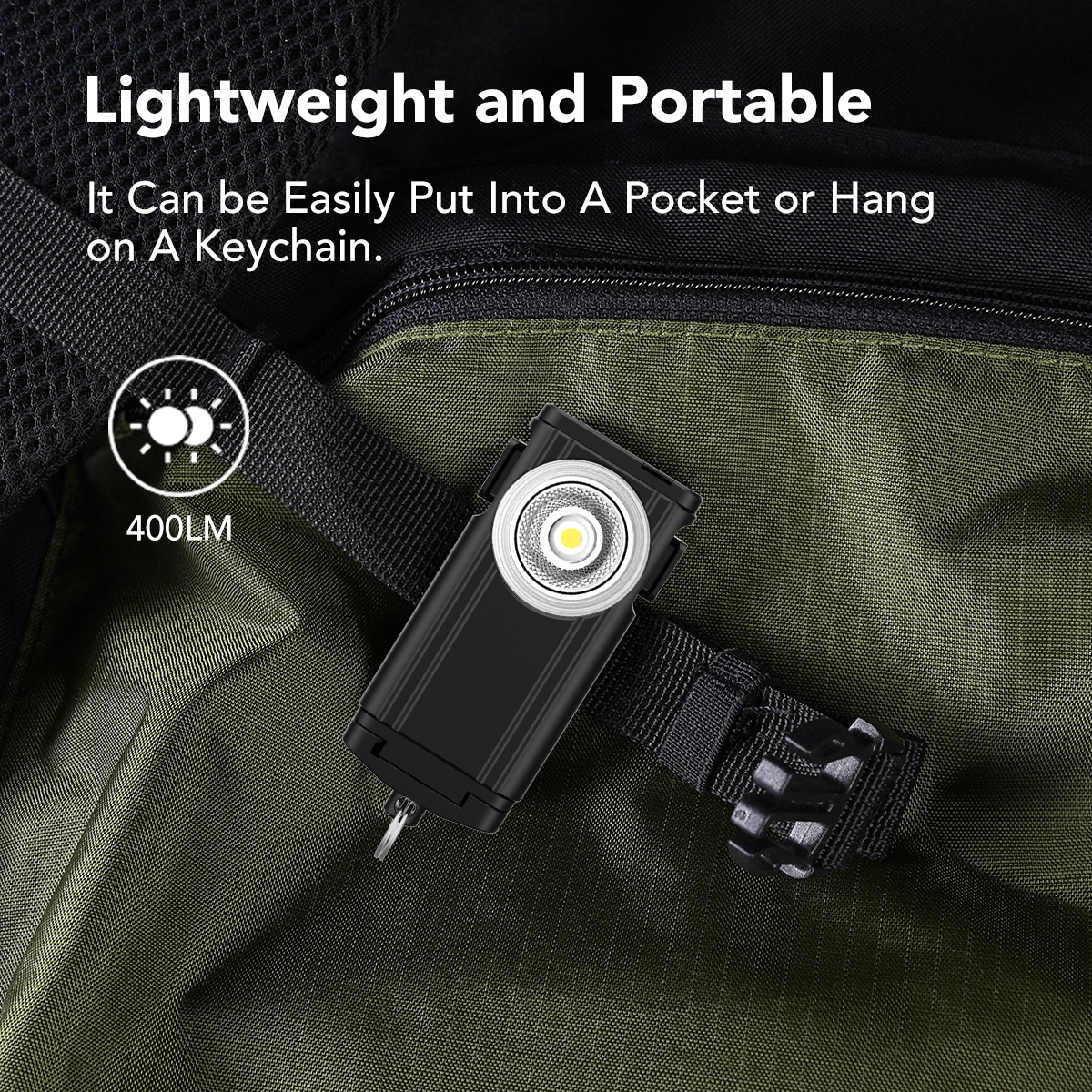
Una mini linterna EDC es una linterna compacta para llevar a diario, diseñada para uso frecuente en bolsillos, llaveros, mochilas o emergencias cuando una linterna de tamaño completo es demasiado grande para llevarla cómodamente cada día. Un producto mini EDC debe equilibrar tamaño, brillo, capacidad de la batería, peso y tiempo de uso real en lugar de perseguir una sola especificación. Una linterna tipo llavero es valiosa porque permanece disponible, no porque sustituya a una gran luz exterior. La G8 es una caja mini EDC de linterna EDC de 64mm, 32g y 400LM. Los compradores B2B deberían evaluar la producción, el comportamiento térmico, la capacidad de la batería, el material de la carcasa, la posición del envase y la consistencia en la producción en masa antes de desarrollar esta categoría.
Por qué importan las luces Mini EDC en el porte diario real
Muchos usuarios no llevan una linterna de tamaño completo todos los días. Una luz más grande puede ofrecer una potencia más potente, pilas más grandes o características más especializadas, pero también puede parecer innecesaria para llaves, bolsillos, bolsas pequeñas o recados diarios. Esto crea un espacio práctico para la categoría de mini linternas EDC.
Las luces para el móvil son útiles y cómodas, pero ocupan el teléfono y pueden no ser ideales para tareas exteriores en la oscuridad, revisiones de vehículos, búsqueda de mochilas o trabajos rápidos. Una luz compacta separada puede ser más fácil de apuntar, más fácil de entregar y más adecuada como herramienta de respaldo.
Luces de llavero muy baratas pueden resolver tareas sencillas, pero algunos usuarios quieren un producto que se sienta más duradero y útil. Una mini luz EDC potente debe ser lo suficientemente pequeña para llevarla y lo bastante brillante para resolver tareas reales de corto alcance. Los compradores B2B deben definir si el producto es para regalar, exhibición en retail, respaldo en exteriores, uso para viajes o para llevar en bolsillo diario antes de la producción.
¿Qué hace diferente a una mini linterna EDC?
ALinterna mini EDCse define por la frecuencia de transporte, no solo por el tamaño corporal. Si los usuarios la dejan en casa porque es demasiado pesada, voluminosa o difícil de usar, no cumple con la función de llevar el día a día, aunque la hoja de especificaciones parezca sólida.
El producto debe ser lo suficientemente ligero para bolsillos, llaveros, bolsillos pequeños y mochilas. La potencia debe coincidir con tareas de corta y corta distancia, mientras que la capacidad de la batería debe mantenerse realista para el tamaño corporal. No se puede esperar que un cuerpo en miniatura se comporte como una gran luz exterior.
El material también afecta a la percepción del producto. Una carrocería de aluminio puede mejorar la sensación estructural y la percepción de durabilidad en comparación con productos desechables de menor calidad. Para los compradores B2B, la mejor especificación no siempre es el número más alto, sino el equilibrio adecuado entre brillo, peso, batería, tamaño y situación de uso.
Una linterna recargable para llavero funciona cuando ayuda a los usuarios a resolver pequeños problemas de iluminación con suficiente frecuencia como para justificar llevarla todos los días.
Estudio de caso G8: Una linterna recargable EDC de 400LM
G8 es unLinterna EDCposicionados como mini linterna EDC, linterna recargable de llavero, linterna compacta de bolsillo y luz portátil OSRAM P8 para el uso diario, iluminación para llaveros, iluminación de bolsillo, iluminación para mochilas, iluminación de viaje, emergencias para vehículos, respaldo doméstico, líneas de regalos y líneas de productos distribuidores EDC. No debe describirse como una linterna táctica, una luz de buceo, luz UV, un producto láser, un dispositivo médico o una luz industrial pesada.
El modo turbo 400LM es adecuado para soporte de alta luminosidad de corta duración y iluminación temporal. Los modos 180LM High y 50LM Medium son más relevantes para tareas diarias comunes, mientras que los modos 20LM Low y 2LM Moon son útiles para observación a corta distancia, comprobaciones nocturnas y uso con bajo deslumbramiento.
El alcance máximo de 40 metros permite luces de respaldo a nivel de llavero y de bolsillo. No debe exagerarse como un foco de largo alcance. El valor del G8 radica en su capacidad para mantenerse disponible en el uso diario mientras proporciona una iluminación útil a corto alcance cuando es necesario.
La batería de litio integrada de 3,7V y 290mAh es adecuada para un producto EDC recargable ultrapequeño. Los compradores B2B deberían tratar esto como un sistema compacto de baterías para iluminación de respaldo y de trabajo, no como una plataforma de alimentación de linterna de tamaño completo.
La longitud total de 64 mm y el peso de 32 g incluyendo batería hacen que el G8 sea práctico para llavero, bolsillo, mochila y posicionamiento de emergencia. La construcción de aleación de aluminio 6061 T6 y el acabado negro anodizado duro favorecen una sensación de producto más profesional para una pequeña lámpara portátil.
¿Cómo deberían los compradores equilibrar la producción, el tamaño y la capacidad de la batería?
La alta salida en un mini cuerpo debe tratarse como brillo basado en la tarea, no como iluminación continua de gran área. Una llavero compacta está diseñada para disponibilidad, tareas cortas y comodidad de respaldo. No debe colocarse como sustituto de una linterna grande para exteriores.
Una pequeña capacidad de batería es normal en productos del tamaño de llaveros. La cuestión importante es si los modos de salida, la capacidad de la batería y las expectativas del usuario están alineados. Los modos bajos son especialmente importantes porque mejoran la usabilidad práctica durante tareas a corta distancia.
El modo Luna puede soportar tiradas nocturnas sin un deslumbramiento excesivo. Los modos bajo y medio pueden ayudar a los usuarios a elegir un brillo cómodo para maletas, habitaciones, vehículos y situaciones de viaje. Los compradores B2B deberían evitar escribir expectativas de tiempo de ejecución poco realistas sin pruebas formales.
La posición del producto debe explicar claramente para qué está diseñada la luz y para qué no está diseñada para reemplazar. Para una mini linterna recargable, esa claridad puede reducir los malentendidos del cliente y mejorar la utilidad de la línea de productos.
Por qué Keychain Carry cambia el posicionamiento del producto
Una llavero de luz compite por el espacio en los bolsillos, no solo por la atención de las estanterías. Si parece demasiado grande, pesado o frágil, los usuarios pueden dejar de llevarlo. El producto debe sentirse pequeño, útil y lo suficientemente duradero para su uso diario frecuente.
Las líneas de productos de regalo pueden valorar tamaño compacto, apariencia limpia y funcionalidad sencilla. Los usuarios de exteriores y de viaje pueden valorar la disponibilidad de respaldo. Los usuarios de emergencia y de emergencia en vehículos pueden preocuparse más por el acceso rápido que por los grandes números de salida. Los distribuidores pueden preferir un posicionamiento claro y una explicación sencilla del producto.
Los compradores B2B deberían considerar el lenguaje del embalaje, el método de visualización y el escenario del usuario objetivo antes de la producción. AProyecto de linterna de llavero personalizadadebe definir si el producto es principalmente un regalo, un accesorio EDC minorista, una luz de marcha atrás o una herramienta compacta de emergencia.
Linterna Mini EDC vs Linterna EDC de tamaño completo
Una mini linterna EDC y una linterna EDC de tamaño completo pueden ser valiosas. La mejor elección depende del comportamiento del usuario, la frecuencia de transporte, las necesidades de batería, el brillo esperado y la posición de la línea de productos.
| Factor de selección | Linterna Mini EDC | Linterna EDC de tamaño completo | Conclusión del comprador |
|---|---|---|---|
| Frecuencia de transmisión | Diseñado para llevarse más a menudo debido a su tamaño pequeño. | Puede llevarse cuando los usuarios esperan tareas más exigentes. | Elige en función de la frecuencia con la que los usuarios llevarán realmente el producto. |
| Comodidad en los bolsillos | Normalmente es más fácil para bolsillos, llaveros y organizadores pequeños. | Puede sentirse más sólido pero puede requerir más espacio. | La comodidad puede decidir si la luz se lleva a diario. |
| Uso en llavero | Muy adecuado para posicionamiento de llaveros y respaldo compacto. | Normalmente es menos adecuado para llevar llavero. | Los productos de llavero necesitan una propuesta de valor diferente. |
| Expectativa de salida | Útil para tareas cortas, iluminación a corta distancia y visibilidad de respaldo. | Puede soportar una salida sostenida más fuerte dependiendo del diseño. | No esperes que un mini body sustituya todos los casos de uso de tamaño completo. |
| Capacidad de la batería | Una capacidad menor es normal debido a la compactación corporal. | Puede usar sistemas de baterías más grandes dependiendo del factor de forma. | Las expectativas de baterías deben coincidir con el tamaño del producto. |
| Distancia de manga | Normalmente se centra en iluminación de respaldo de corto y corto alcance. | Puede soportar distancias mayores dependiendo del diseño óptico. | La distancia de la viga debe coincidir con la aplicación prevista. |
| Gestión del calor | Necesita una planificación realista de la salida porque el cuerpo es pequeño. | Puede tener más masa corporal para que el calor se propague dependiendo de la estructura. | Un alto rendimiento en productos pequeños debe posicionarse con cuidado. |
| Ajuste en el mercado de regalos | El tamaño compacto y el atractivo para el uso diario pueden encajar en las líneas de productos de regalo. | Puede encajar en categorías más especializadas para exteriores o herramientas. | La posición de los regalos debe estar respaldada por una función y apariencia claras. |
| Valor de respaldo de emergencia | Útil porque es fácil tenerla cerca en llaves, bolsas o vehículos. | Útil cuando se necesita una mayor capacidad de iluminación. | El valor de la copia de seguridad depende tanto de la disponibilidad como del rendimiento. |
| Posicionamiento B2B del producto | Ideal para el uso diario, iluminación de llaveros, transporte de respaldo y líneas de comercio compacto. | Mejor para usuarios que aceptan más tamaño para mayor capacidad. | Ninguna de las dos categorías es automáticamente mejor para todas las líneas de productos. |
¿Qué deberían preguntar los compradores B2B antes de desarrollar una mini linterna EDC?
Los compradores B2B no deberían elegir una mini linterna EDC solo porque sea pequeña y brillante. Un producto exitoso debe coincidir con los hábitos reales de transporte, la capacidad de la batería, las expectativas de producción, el comportamiento térmico, el lenguaje del embalaje y la posición en el comercio minorista. Estas ocho preguntas ayudan a estructurar unFabricante de linternas ODM EDCDiscusión antes de la producción.
¿El producto está pensado para usar en llavero, bolsillo, mochila o regalo?
Un producto de llavero, un regalo y una luz de respaldo para viajes pueden necesitar un embalaje y mensajería de usuario diferentes. Define el caso de uso antes de seleccionar los modos de salida, el tamaño del cuerpo o el acabado.
¿Qué rendimiento es realista para el tamaño del cuerpo?
Las luces pequeñas pueden ofrecer brillo útil, pero las afirmaciones de salida deberían coincidir con el comportamiento térmico, la capacidad de la batería y las tareas reales del usuario. Evita colocar un mini cuerpo como sustituto de tamaño completo para exteriores.
¿La capacidad de la batería coincide con el uso previsto?
Una pequeña batería de litio puede soportar posicionamientos compactos y recargables, pero las expectativas deben mantenerse realistas. El embalaje debería explicar el producto como una luz de marcha atrás compacta en lugar de una luz de trabajo de gran capacidad.
¿Son útiles los modos bajos para las tareas diarias?
Los modos de baja y luna pueden ser más útiles que la potencia máxima para tareas nocturnas a corta distancia. Los compradores deberían revisar si la estructura del modo admite comportamientos cotidianos reales.
¿Es el material de la carcasa adecuado para llevar repetidamente?
Una llavero puede rozar llaves, bolsas y bolsillos. La construcción y el acabado superficial de aluminio pueden mejorar la sensación del producto, pero el diseño debe revisarse para las condiciones de transporte diario.
¿Cómo debería explicar el embalaje las limitaciones de los productos compactos?
El embalaje debe dejar claro el papel del producto: compacto, recargable, fácil de transportar y útil para iluminación de respaldo. No debe implicar tiempo de funcionamiento a tamaño completo, capacidad calorífica completa ni uso especializado de alta resistencia a menos que se verifique.
¿Qué pruebas se necesitan antes de la producción en masa?
Los proyectos de mini EDC deben revisar la vida útil del interruptor, el rendimiento luminoso, el comportamiento de la temperatura, el comportamiento de la batería, la calidad de la carcasa y la consistencia del montaje. El alcance de las pruebas debe coincidir con las afirmaciones reales del producto y el mercado objetivo.
¿Puede el fabricante dar feedback ODM antes de la producción?
Un socio profesional ODM debería revisar el escenario del usuario, la estructura compacta, la selección de LEDs, la capacidad de la batería, el diseño de la carrocería de aluminio, la explicación del embalaje y la fabricabilidad antes de que se bloqueen las decisiones de producción.
Cómo SHENGQI LIGHTING apoya proyectos de mini linternas EDC ODM
ILUMINACIÓN SHENGQIes la marca de Dongguan Shengqi Lighting Technology Co., Ltd., con raíces manufactureras que se remontan a 1981. Dongguan Shengqi Lighting Technology Co., Ltd. se estableció formalmente en 2008. La empresa se centra en linternas, productos de iluminación portátil y servicios de fabricación OEM/ODM.
La empresaCartera de productosincluyeLinternas EDC, linternas de exterior, linternas tácticas, faros frontales, luces de camping, luces de caza, luces de buceo, farolas de herramientas, accesorios y productos OEM. Para productos mini EDC como el G8, el valor no es solo la capacidad de producción. La ventaja es la capacidad de conectar la configuración del usuario, la estructura compacta, la selección de LEDs, la capacidad de la batería, el diseño de la carrocería de aluminio, la explicación del embalaje y la fabricación repetible.
La empresa apoyaServicios OEM/ODMincluyendo Diseño Industrial, Diseño de Ingeniería Óptica, Diseño Electrónico, Diseño de Envases, Fabricación y Ensayos. Sus capacidades en fábrica incluyen unos 130.000 pies cuadrados de espacio de fabricación, 75 máquinas CNC, una línea de producción SMT totalmente automatizada, dos líneas de soldadura y once líneas de montaje libres de polvo.
Para los programas de mini linternas de aluminio, las máquinas CNC soportan la fabricación de cuerpos de aluminio y la consistencia dimensional. La línea SMT automatizada soporta el ensamblaje electrónico, mientras que las líneas de soldadura y las líneas de montaje libres de polvo soportan el control de producción. Los recursos de prueba ayudan a evaluar la vida útil del interruptor, vibraciones, caídas, rendimiento luminoso, temperatura, comportamiento en altas y bajas temperaturas, rendimiento en resistencia al agua y comportamiento de la batería. ElAntecedentes de la empresaestá apoyado por un sistema de gestión de calidad ISO9001 para la gestión organizada de la fabricación.
Preguntas frecuentes
1. ¿Qué es una mini linterna EDC?
Una mini linterna EDC es una linterna compacta para llevar todos los días, diseñada para usar frecuentemente en bolsillos, llaveros, mochilas o emergencias cuando una linterna de tamaño completo no es cómoda de llevar todos los días. Su valor proviene de su disponibilidad, tamaño reducido, brillo útil y una función realista de iluminación de respaldo. Un buen producto mini EDC debe equilibrar la producción, el peso, la capacidad de la batería, el comportamiento térmico, el material de la carcasa y el lenguaje del embalaje. No debería colocarse como sustituto de todas las tareas de linterna de tamaño completo.
2. ¿Es útil una linterna de llavero para llevar a diario?
Sí, una linterna de llavero puede ser útil para llevar a diario porque se mantiene cerca del usuario y puede realizar tareas de iluminación rápida. Es adecuado para encontrar objetos, facturar maletas, respaldo de vehículos, iluminación de viaje, respaldo doméstico y uso de emergencia a corta distancia. La ventaja no es que sustituya a una linterna grande para exteriores. La ventaja es que los usuarios tienen más probabilidades de llevarlo consigo. Los compradores B2B deberían evaluar el tamaño, peso, modos de salida, capacidad de batería y material antes de colocar una luz de llavero.
3. ¿Son suficientes 400 lúmenes para una mini linterna EDC?
Sí, 400 lúmenes pueden ser suficientes para una mini linterna EDC cuando el producto está diseñado para soporte de alta luminosidad de corta duración y tareas diarias de respaldo. Para el G8, el Turbo 400LM ofrece a los usuarios una opción más brillante cuando se necesita más luz, mientras que High 180LM, Medium 50LM, Low 20LM y Moon 2LM permiten un uso más común a corta distancia. Los compradores deberían evaluar el brillo junto con la capacidad de la batería, el tamaño del cuerpo, el comportamiento térmico, la estructura de modos y la aplicación realista, en lugar de juzgar solo por la potencia máxima.
4. ¿Qué batería usa la linterna G8 mini EDC?
La linterna G8 mini EDC utiliza una batería de litio de 3,7V y 290mAh. Esta capacidad de batería se adapta a la posición compacta del llavero recargable y al tamaño corporal ultra pequeño del producto. No debe describirse como usando formatos de batería AA, AAA, 14500, 18650 o reemplazables basándose en los datos del producto utilizados en este artículo. El embalaje y las instrucciones de usuario deben explicar el producto como una pequeña luz de respaldo recargable EDC, no como una linterna de tamaño completo y alta capacidad.
5. ¿Es la G8 una linterna táctica?
No. En los datos del producto utilizados en este artículo, la G8 se posiciona como una mini linterna EDC y una llavero recargable para el bolsillo, no como una linterna táctica. Debe tratarse en el contexto del uso diario, iluminación de llaveros, iluminación de bolsillo, iluminación de mochila, iluminación de viaje, emergencias de vehículos, respaldo doméstico, líneas de productos de regalo y líneas de productos EDC de distribuidores. No debe describirse como una luz para armas, producto militar, producto para fuerzas del orden, luz de buceo, luz UV o producto láser.
6. ¿Qué deberían comprobar los compradores al comprar mini linternas EDC?
Los compradores deben comprobar el caso de uso objetivo, tamaño de carrocería, peso, modos de salida, capacidad de batería, material, acabado superficial, comportamiento térmico, lenguaje de embalaje y consistencia en la producción. Para una mini linterna recargable, los modos más bajos y las expectativas realistas de la batería pueden importar tanto como la salida principal. Los compradores también deben revisar si el producto está destinado a usar en llaveros, programas de regalo, respaldo de viaje, respaldo doméstico o líneas de venta minorista de distribuidores. Cada posición de mercado necesita diferentes criterios de mensaje e inspección.
7. ¿Cómo pueden las marcas desarrollar una mini linterna EDC personalizada con SHENGQI LIGHTING?
Las marcas pueden comenzar definiendo el usuario objetivo, el método de transporte, los modos de salida, el sistema de batería pequeña, el diseño de la carrocería de aluminio, las instrucciones de embalaje y los requisitos de producción. SHENGQI LIGHTING apoya proyectos de mini linternas EDC ODM a través de Diseño Industrial, Diseño de Ingeniería Óptica, Diseño Electrónico, Diseño de Envases, Fabricación y Pruebas. Los responsables de producto y los equipos de aprovisionamiento OEM/ODM pueden utilizar elPágina de contactoPara hablar sobre las necesidades de desarrollo de linternas recargables para linternas.
Elige productos Mini EDC por frecuencia de carga y valor real de respaldo
ALinterna mini EDCresuelve el problema de la iluminación de marcha atrás frecuente y temporal. No es solo una pequeña luz; Debe equilibrar tamaño, peso, brillo, modos, capacidad de batería, material de la carcasa y escenarios reales de usuario.
El G8 demuestra esta dirección a través de la salida Turbo 400LM, LED OSRAM P8, longitud total de 64 mm, peso de 32 g incluyendo batería, batería de litio de 3,7V 290 mAh, construcción en aleación de aluminio 6061 T6 y acabado negro anodizado duro.
Los usuarios deben evaluar el tamaño corporal, peso, brillo, modos de salida, capacidad de batería, material de la carcasa y el caso de uso real antes de elegir una linterna recargable para llaveros. Las marcas B2B que desarrollan productos mini EDC deben revisar los hábitos de transporte de los usuarios, las expectativas de batería, el comportamiento térmico, la expresión del envase y la consistencia en la producción en masa. SHENGQI LIGHTING puede soportar el desarrollo, fabricación y pruebas de linternas mini EDC ODM para líneas de productos civiles.
Desarrolla proyectos de mini linternas recargables con llaveros adaptados a las necesidades reales de llevar a diario
Las marcas de equipos EDC, marcas de productos para exteriores, marcas de accesorios de viaje, kits de emergencia para automóviles, marcas promocionales de regalos, distribuidores, importadores, gestores de producto y equipos de aprovisionamiento OEM/ODM pueden debatir sobre proyectos de mini linternas EDC, desarrollo de linternas recargables para llaveros, diseño de carrocería compacta de aluminio, planificación de producto OSRAM LED, selección de sistemas de baterías pequeñas, embalaje e instrucciones de usuario, desarrollo, fabricación y pruebas ODM con SHENGQI LIGHTING.